
Service
Drone Photovoltaic Panel Cleaning
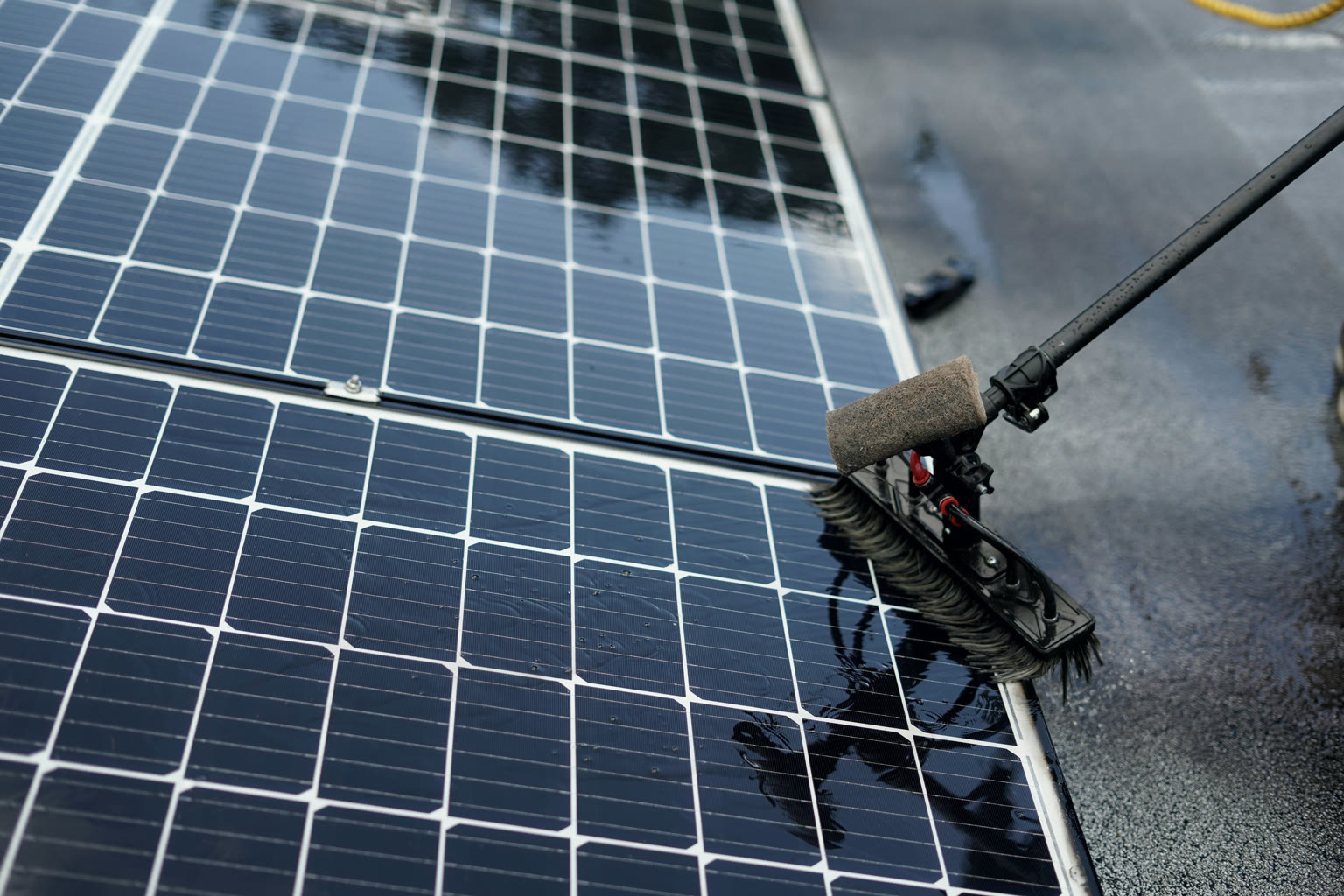
Rooftop and industrial photovoltaic arrays cleaned with demineralised water at controlled pressure.
Overview
Soiling reduces photovoltaic performance. TERRABONA cleans modules by drone using demineralised or purified water, with parameters compatible with manufacturer guidance.
No specific yield increase is promised. Any change in performance is reported only against measurements supplied or approved by the client.
From a real project
Drone cleaning a glass façade in operation
Suitable surfaces and contamination
Property types
- Commercial rooftop systems
- Industrial photovoltaic systems
- Self-consumption installations
- Warehouse rooftops
Structural elements
- Rooftop arrays
- Carport and canopy systems
- Modules in difficult-access positions
Surfaces
- Module cover glass
- Anti-reflective coatings
- Aluminium frames
Contamination
- Dust
- Pollen
- Salt
- Bird contamination
- Industrial pollutants
Methodology
- Module manufacturer guidance reviewed
- Water quality and conductivity confirmed
- Non-contact method selected where appropriate
- Array-by-array cleaning at controlled pressure
- Before-and-after documentation per zone
Technical parameters
Water and pressure
- Demineralised or purified water to avoid mineral deposits.
- Low pressure compatible with module manufacturer specifications.
- Water conductivity and quality verified on site.
- Non-contact method selected where appropriate.
- Consumption calculated per MWp for supply planning.
Cleaning agents
- Water-only cleaning as standard to protect module coatings.
- Products used only with manufacturer or owner approval.
- Substances affecting anti-reflective coatings avoided.
- Documentation maintained to protect equipment warranties.
Limits and weather
- Work avoided when module temperatures are high.
- Wind limits for stable flight above array rows.
- Scheduling outside peak production hours where required.
- Airspace review across extended installations.
- Coordination with SCADA and operations personnel.
Access and zones
- Exclusion zones per array section under work.
- Site electrical safety rules observed at all times.
- Coordination with plant maintenance personnel.
- Defined support-vehicle routes inside the site.
Environment
- Water consumption controlled per module.
- Runoff free of chemical load where water-only cleaning is applied.
- Electrical equipment and connections protected.
- Project environmental parameters recorded.
Operational disruption
- Scheduling aligned to production sensitivity.
- Sectional work per inverter or per zone.
- Minimal interference with plant operation.
- Agreed in advance with the asset manager.
Quality control
- Visual cleanliness inspection per array.
- Before-and-after photographic documentation per zone.
- Modules with visible defects recorded and reported to the owner.
- Completion report including a coverage map of the site.
Maintenance
- Cleaning cycles based on dust, pollen and local conditions.
- Seasonal programmes for arid or coastal installations.
- Multi-year maintenance contracts for solar portfolios.
- Frequency reviewed against client-supplied performance data.
Information required for assessment
- Installed capacity and module count
- Module type and coatings
- Water availability and quality
- Production schedule and peak hours
- Site electrical safety rules
Frequently asked questions
Do you guarantee a production increase?
No. No performance guarantees are given. Any change is reported only against verified client measurements.
Are module coatings affected?
The methodology is selected to protect coatings, with water-only cleaning as the default.
Assessment
Start your project assessment
Submission of project information does not constitute acceptance, approval or confirmation. Every project is subject to technical, commercial, regulatory, safety and operational assessment.